
The pale line across the back of your head, or the scatter of dots where the grafts were taken. SMP places pigment into and around the scar tissue to close the contrast — so you can cut your hair short again without it announcing itself.
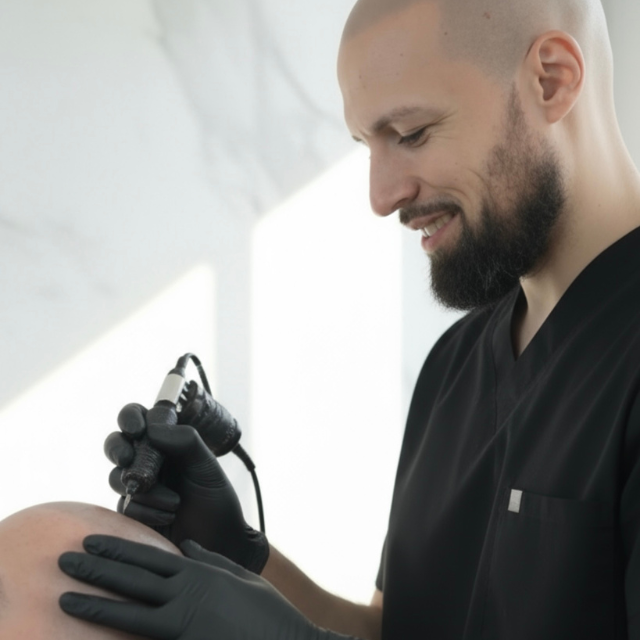
The reason a donor scar catches the eye isn’t really the scar — it’s the difference in colour between pale, hairless scar tissue and the darker hair around it. Cut your hair to a number two and that difference becomes a bright line or a field of pale dots. Grow it out and it vanishes. That’s contrast, not texture.
Scar camouflage works on exactly that. Pigment is placed into and around the scar tissue at follicle scale, pulling its tone toward the surrounding scalp until the boundary stops registering at normal viewing distance. The scar is still there. It just stops being the thing people notice.
For most clients the practical outcome is simple: they can go back to clipper cuts. If you’ve been growing your hair longer than you’d like purely to cover the back of your head, this is the treatment that ends that.
Book a Free Consultation
They’re both donor-site scarring, but they behave differently under the needle and the approach isn’t interchangeable.
A single linear scar running across the back of the head, sometimes ear to ear. It can be fine and flat, or wide and raised depending on how you healed and how much tension was on the closure.
These are the harder of the two. The scar is a continuous band with no follicles in it, so we’re building the illusion of density across a gap. We work along the length in light passes, varying dot size and spacing so the eye reads texture rather than a solid stripe — a uniform fill would just replace a pale line with a dark one.
Hundreds or thousands of small round scars where individual follicles were punched out, spread across the back and sides. Individually tiny; collectively they read as a moth-eaten or washed-out look at short lengths.
Generally more forgiving. Rather than treating each dot, we work across the whole donor area to bring the overall tone up, so the pale specks stop standing out against the surrounding scalp. Overharvested donor areas often improve substantially.
This reduces visibility. It doesn’t erase scars. Pigment changes colour, not texture. A raised or indented scar will still have that texture up close and under direct light. What changes is that at conversational distance, in normal light, it stops being what people see. Anyone promising complete removal is overselling.
Scar tissue is unpredictable, so we test first. It holds pigment differently to healthy scalp — sometimes it absorbs more and goes darker than intended, sometimes it rejects and fades fast. We almost always treat a small discreet section first and review it before committing to the full length. Scars should also be at least twelve months old and fully settled.
Scar work is the most cautious thing we do. There’s no undoing a scar that’s been overworked, so every stage is deliberately conservative.
We look at the scar under proper light — how old, how wide, raised or indented, and how it’s pigmented. You’ll get a realistic picture of the improvement available, not a sales pitch.
A small, discreet section treated and left to settle for a week or two. This tells us how your scar tissue actually holds pigment — information no consultation can give us by eye alone.
Light passes along the full scar, spaced 7–14 days apart, adjusting depth and tone based on how the previous layer settled. We build up to the target rather than aiming straight for it.
A final pass blends the treated area into the surrounding scalp so there’s no visible edge to the work itself. Written aftercare, and an open door if anything shifts as it settles.
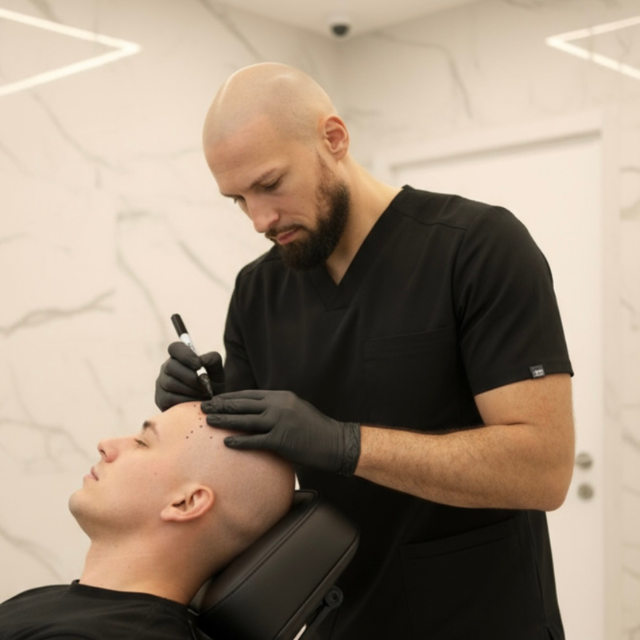
Every result below was built one careful session at a time, on a real client, in this studio.
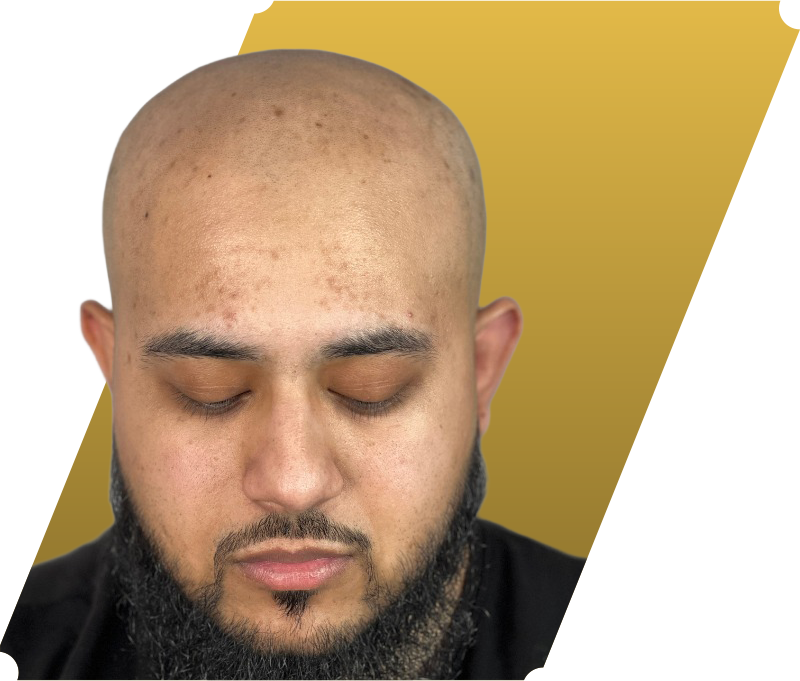
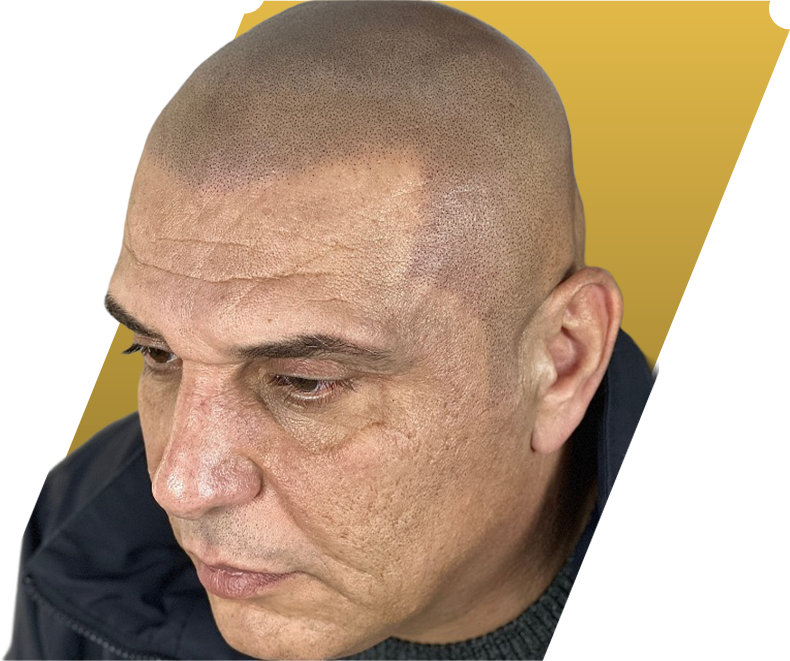
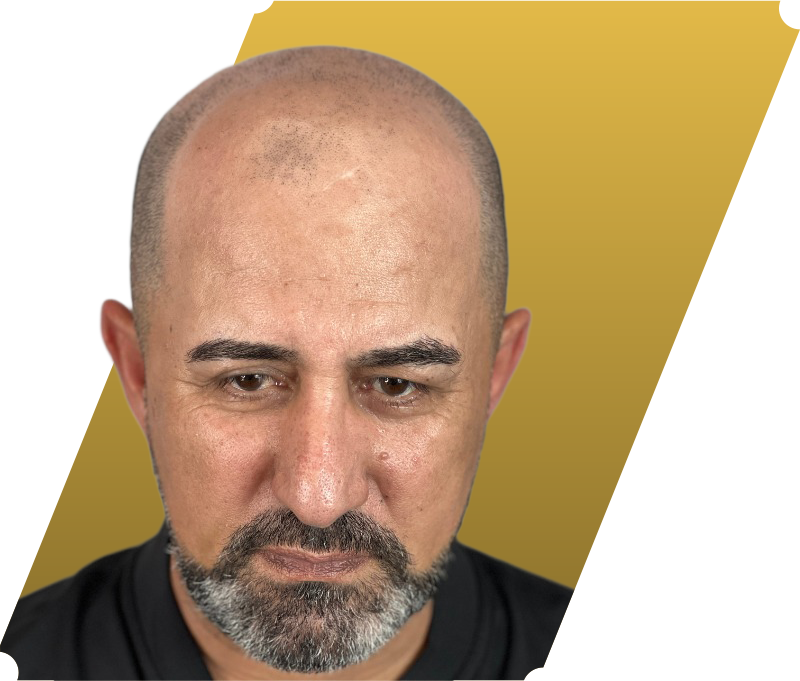
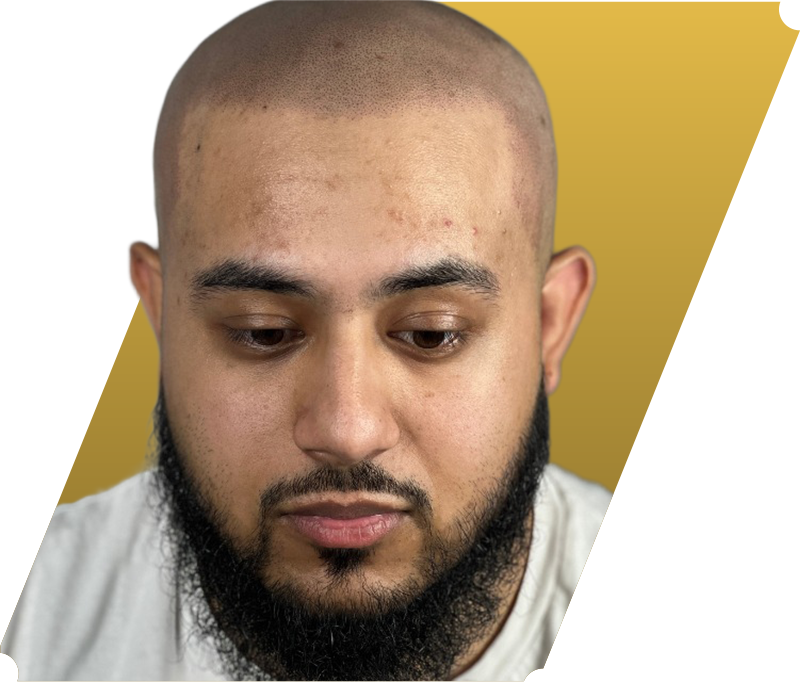
Real reviews from real clients across Birmingham and the wider West Midlands.
Sending a big thank you to Alex. My hair looks great — so natural looking. I went for a darker look to go with my tan and it looks great in all lights. If you want a natural-looking SMP, use Alex!
Went along with my son to get his SMP. Well done Alex — a dedicated and professional young man. My son is over the moon with the results. So nice not to see him wearing caps anymore. Looks so natural. Definitely 5 stars and more.
Send us a photo of the scar and roughly when the surgery was done. We’ll come back with a straight assessment of the improvement available — including if the answer is to wait, or to have further surgery first.