
If folliculitis has settled but left bald patches, reduced density or visible scarring, scalp micropigmentation can make the affected area far less obvious. The important word there is settled.
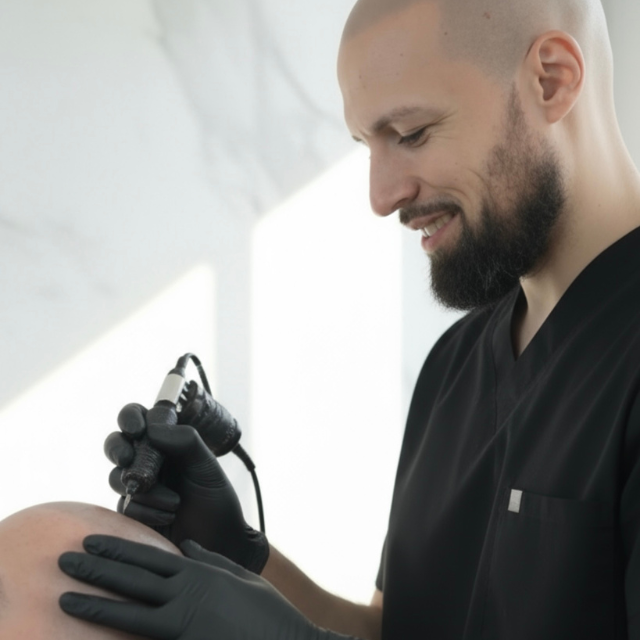
SMP does not treat folliculitis, stop inflammation or prevent another flare. What it can do is camouflage the visible hair loss left behind, once the scalp is healthy enough to work on.
If the skin is still inflamed, sore or actively breaking out, we will tell you to wait.
Folliculitis affects the hair follicles. For some people it clears without leaving any lasting change. For others, particularly after repeated or more severe inflammation, the scalp can be left with thinner areas, bald patches or visible scarring.
SMP works by reducing the contrast between those areas and the hair around them. Where you still have hair through the area, we place pigment between the existing follicles so the scalp underneath becomes less visible.
Where follicles have been permanently lost, we recreate the appearance of tiny shaved follicles across the bare area and blend them into the surrounding hair. Where scarring is involved, we work more cautiously, because scar tissue can behave differently to healthy scalp.
What we are not doing is disguising an active medical condition. We are improving the appearance of what is left once that condition is stable.
Book a Free Consultation
If the scalp is red, inflamed, tender, crusted, broken or producing active spots or pustules, it is not ready for SMP. That is not something we work around. The inflammation needs to be assessed and controlled first.
If you experience recurrent folliculitis, or you have been diagnosed with a chronic or scarring form of the condition, we may ask you to speak to your GP or dermatologist before treatment. In some cases we will want confirmation that the condition is stable before we pigment the affected area.
There is no benefit in rushing SMP onto skin that is still changing. A good result starts with knowing when not to treat.
Folliculitis leaves different patterns behind depending on how severe it was and how often it flared. These are the ones we see most.
Good folliculitis-related SMP is less about how quickly we can add pigment and more about making sure we are working on the right skin at the right time.
We start with your history. How long have you had folliculitis? When was the last flare? Is the area still changing? Have you been diagnosed with a particular type? We look at the scalp under proper light and give you a straight answer about whether it is ready for SMP. Sometimes that answer is not yet.
Once we know the skin is suitable, we look at the pattern left behind. That could mean adding density between existing hairs, blending a small bald patch, or camouflaging scar tissue. Pigment, spacing and density are all planned around the hair that is already there.
The first layer is deliberately conservative. We build enough pigment to start reducing the contrast without trying to force the entire result into one appointment. With previously inflamed or scarred skin, seeing how that first layer heals gives us useful information before we go further.
Once the first session has settled, we build more density where it is actually needed. Tone, spacing and depth can all be adjusted based on the healed result. That gradual process is what helps the final work sit naturally alongside your existing follicles.
You leave with clear aftercare instructions and our number if anything concerns you during healing. If the folliculitis ever becomes active again, the priority is treating the flare and letting the skin recover before we consider any further SMP work.
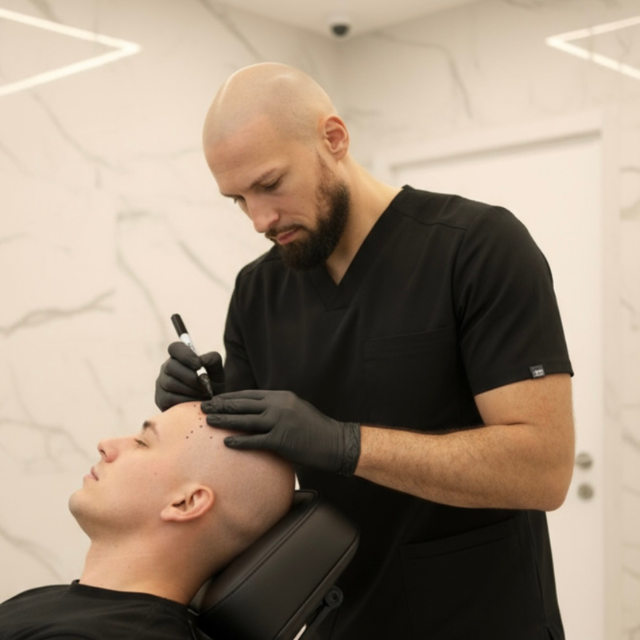
If folliculitis has left permanent scar tissue, the approach changes slightly. Scar tissue can have a different colour, texture and pigment retention pattern from the surrounding scalp.
SMP does not remove the scar or change its texture. Instead we place pigment in and around suitable scarred areas to reduce the contrast between the scar and the surrounding hair or shaved follicles.
For more significant scarring we may recommend starting with a small area and assessing the healed result before treating more widely. The aim is realistic improvement, not pretending the underlying scar is no longer there.
More on scar camouflageThe first question is not how much pigment we can add. It is whether the scalp should be treated at all.
Active inflammation is a reason to postpone treatment. We would rather delay a booking than work on skin that is not ready.
Previously inflamed and scarred skin can be less predictable. Multiple lighter sessions give us more control over the healed result.
The goal is not to make every part of the scalp identical. It is to make the affected area stop drawing the eye.
Pigment choice, depth and spacing are all planned around the long-term result, not just how the scalp looks immediately after treatment.
Treatments are carried out by appointment at our Halesowen studio, just outside Birmingham, with free parking on site.
Send us a photo and tell us when your last flare was. We will give you a straight answer, including if the answer is to wait.
Real reviews from real clients across Birmingham and the wider West Midlands.
Sending a big thank you to Alex. My hair looks great, so natural looking. I went for a darker look to go with my tan and it looks great in all lights. If you want a natural-looking SMP, use Alex!
Went along with my son to get his SMP. Well done Alex, a dedicated and professional young man. My son is over the moon with the results. So nice not to see him wearing caps anymore. Looks so natural. Definitely 5 stars and more.
Tell us about your folliculitis: how long you have had it, when the last flare was, and what has been left behind. We will come back with a straight answer about whether the scalp is ready, including if the answer is to wait.