
Whether you’re dealing with patchy areata, total loss, or hair that’s thinned from years of tight styling — SMP can give you back an even, consistent finish. Delivered personally at our Halesowen studio, with honest advice about what it will and won’t do.
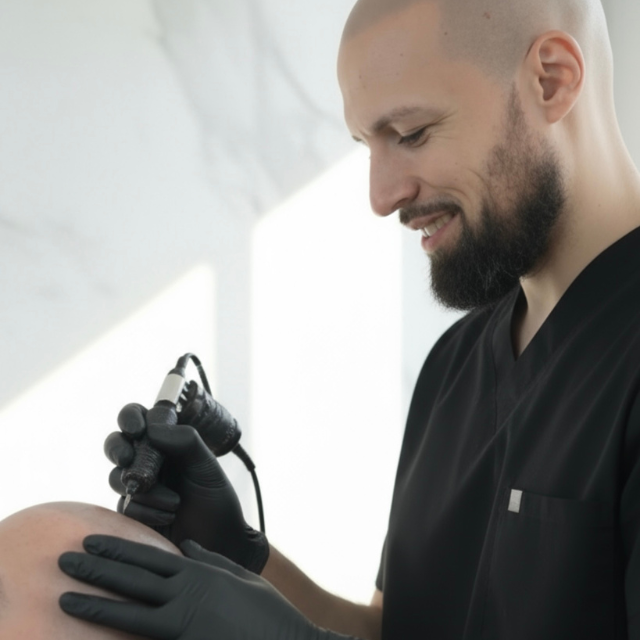
Let’s be straight about this from the start: scalp micropigmentation is not a medical treatment for alopecia. It won’t regrow hair, slow the condition down, or change what’s happening under the skin. What it does is remove the contrast — the patches, the uneven edges, the pale scalp showing through — that makes alopecia visible to everyone else.
For patchy loss, pigment is placed to blend the bare areas into the surrounding hair until the boundary between the two stops registering. For total loss, we build an even shadow across the whole scalp, giving the clean, deliberate look of a closely shaved head rather than the look of hair that’s gone.
That distinction matters to most of our alopecia clients. There’s a real difference between looking like you’ve lost your hair and looking like you’ve chosen to shave it — and for a lot of people, that difference is the whole point.
Book a Free Consultation
Alopecia areata is unpredictable. Hair can regrow in patches we’ve treated, and new patches can appear in areas we haven’t — which means a result that looks perfect today may need adjusting later. We’ll talk this through properly before you book anything, because going in with realistic expectations is the difference between being pleased with SMP and being disappointed by it.
If your hair loss is recent, still actively changing, or you haven’t yet had it looked at, please see your GP or a dermatologist first. Some forms of hair loss are treatable, and we’d rather you explored that before spending money with us. For scarring alopecias — frontal fibrosing, lichen planopilaris and similar — we’ll usually ask for written sign-off from your dermatologist confirming the condition is stable before we treat.
“Alopecia” covers a lot of ground, and the right approach for one type is the wrong approach for another. Here’s how we handle the ones we see most.
SMP is built in layers rather than applied in one go. With alopecia that matters even more than usual — it lets us see how your scalp holds pigment before committing to depth, and gives us room to adapt if the pattern shifts.
We look at your scalp under proper light, ask about your history and how stable the loss has been, and give you a straight answer about whether SMP suits your pattern — including when it doesn’t.
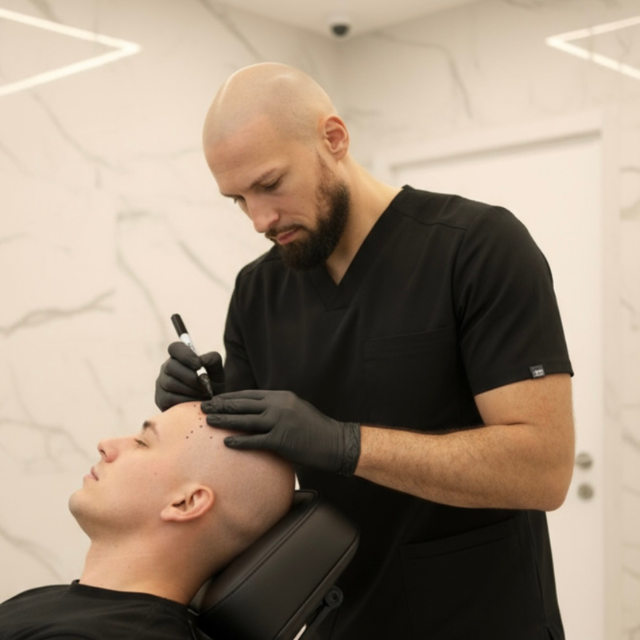
The foundation layer, kept deliberately light. For patchy areata we start inside the patch and work outward; for total loss we map the hairline first. You’ll leave with a visible change that settles within a couple of days.
One or two more, spaced 7–14 days apart. We add depth where the first pass has settled and adjust tone as we go. This is where it stops looking applied and starts looking like hair.
Written aftercare, minimal downtime, and an open door. With alopecia especially, come back if the pattern shifts — adjusting early is far easier than reworking a large area later.
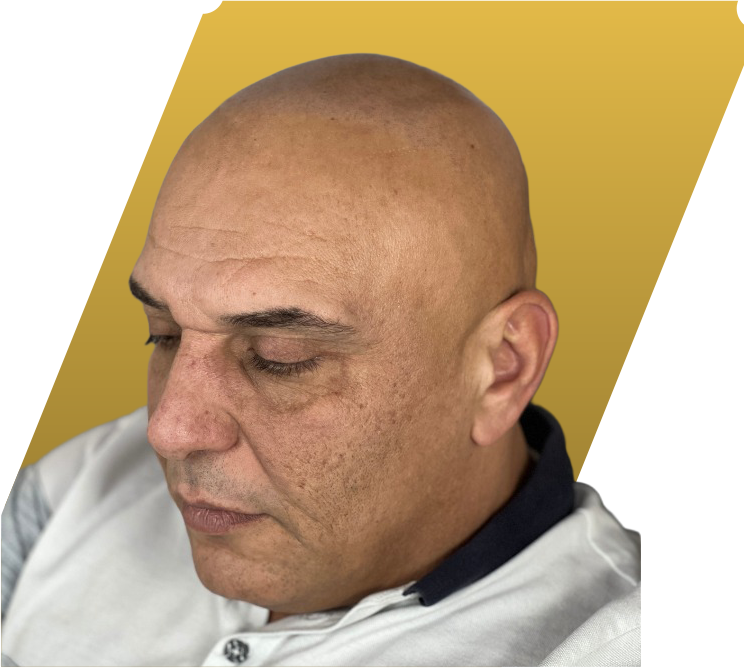
Every result below was built one careful session at a time, on a real client, in this studio.
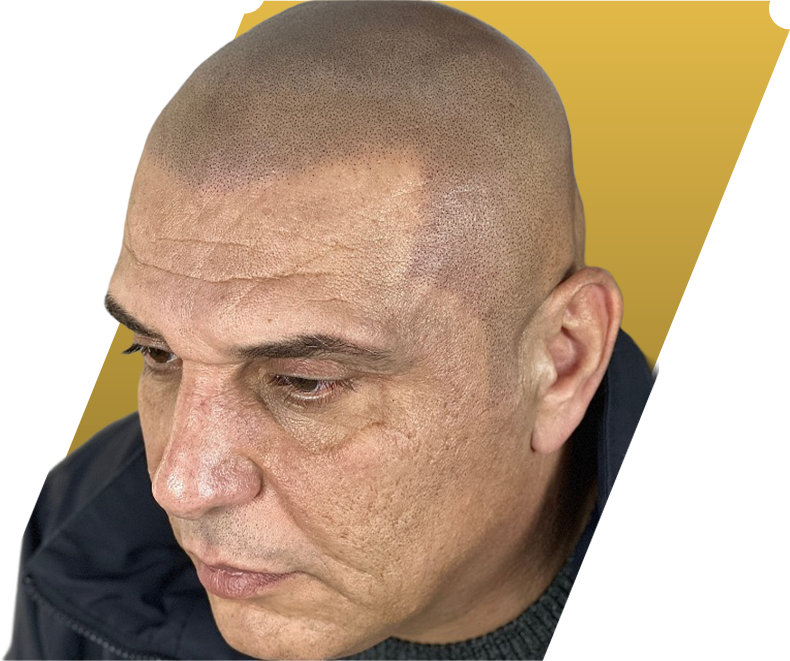
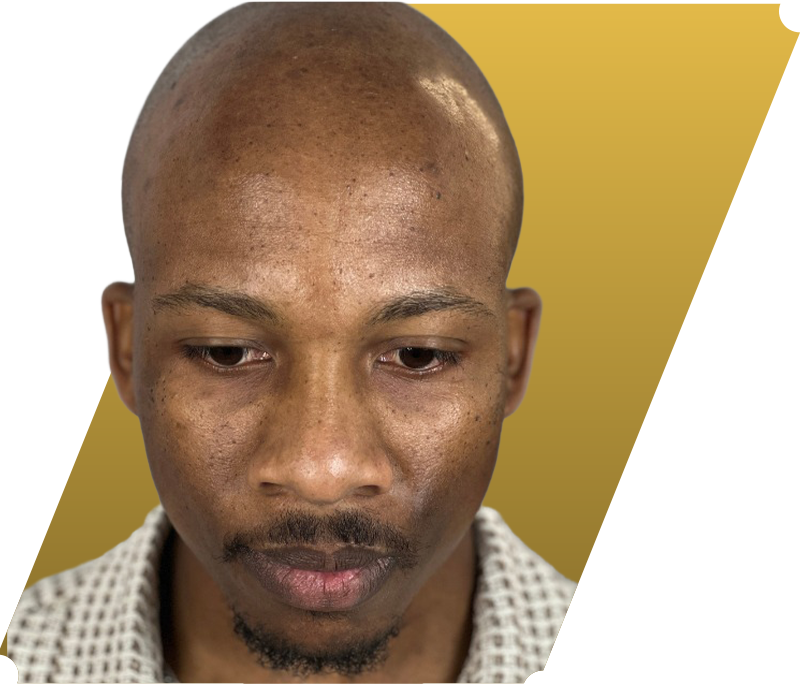
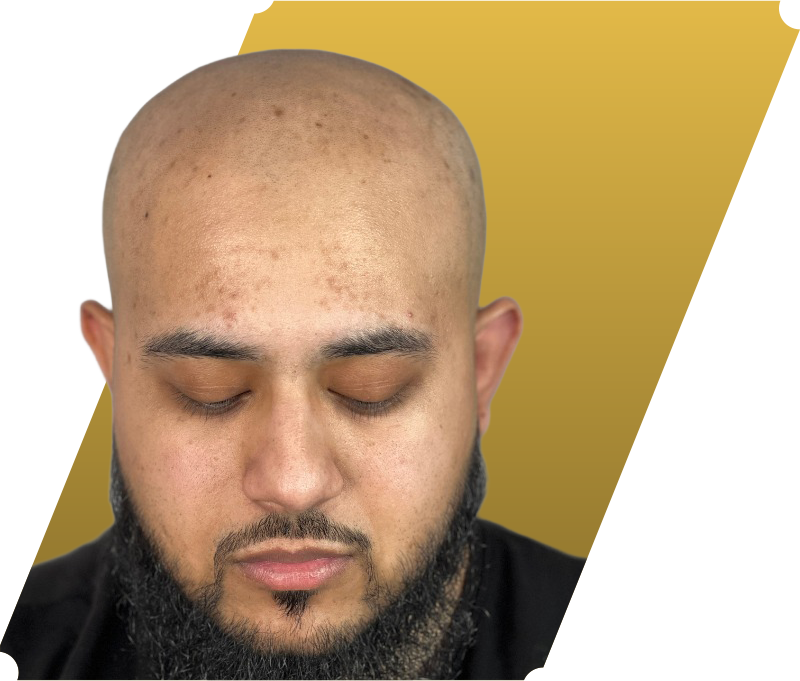
Real reviews from real clients across Birmingham and the wider West Midlands.
Sending a big thank you to Alex. My hair looks great — so natural looking. I went for a darker look to go with my tan and it looks great in all lights. If you want a natural-looking SMP, use Alex!
Went along with my son to get his SMP. Well done Alex — a dedicated and professional young man. My son is over the moon with the results. So nice not to see him wearing caps anymore. Looks so natural. Definitely 5 stars and more.
Tell us a bit about your hair loss — how long it’s been going on, whether it’s still changing, and what you’re hoping for. We’ll come back with clear, straight information, including whether now is the right time.