
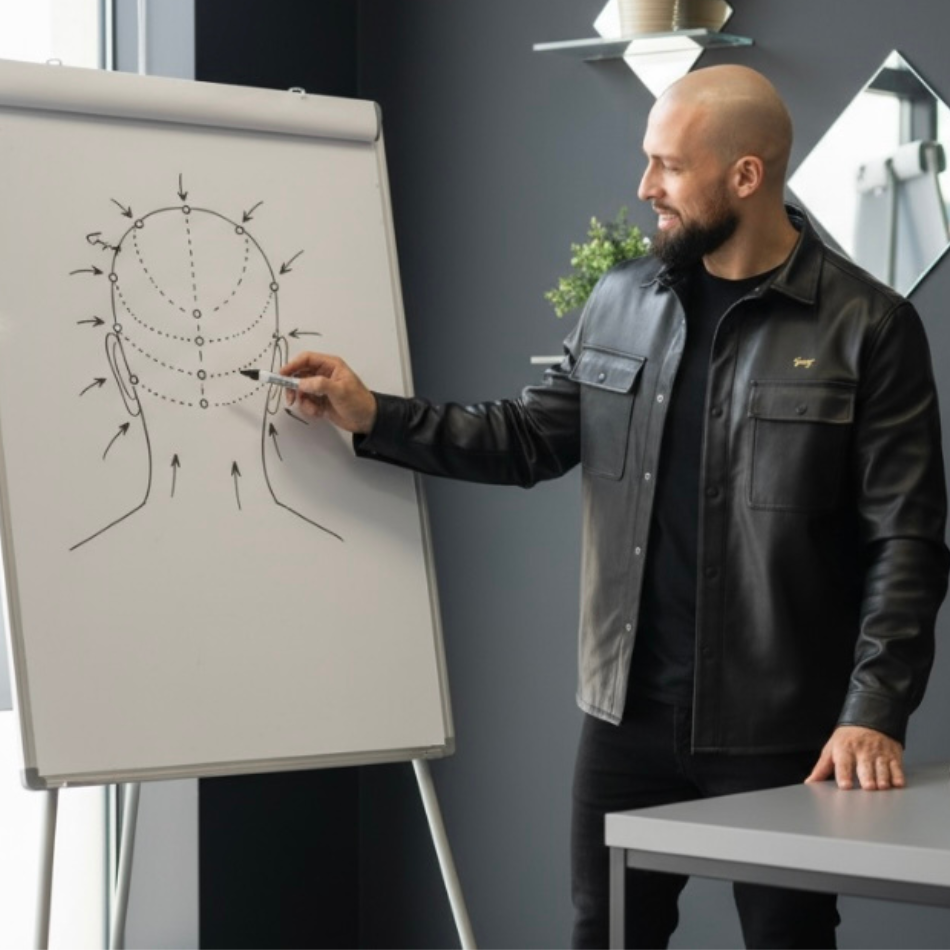
Scalp micropigmentation sits at the intersection of artistry, technical precision and client care. If you are considering a career as an SMP artist in the UK, the appeal is easy to understand: detailed hands-on work, meaningful client transformations and the opportunity to build a specialist business.
But a course certificate alone does not make someone ready to treat paying clients. Here is what the journey really involves, from training and infection control to portfolio building and business basics.
What Does an SMP Artist Do?
An SMP artist uses specialist equipment and pigment to create the appearance of hair follicles or greater density on the scalp. Treatments can include shaved-head effects, soft hairline restoration, density work and some forms of scar camouflage. Every treatment requires careful consultation, design, skin assessment, hygiene and aftercare.
Step 1: Learn the Fundamentals
Look for structured training that covers scalp anatomy, skin types, pigment selection, needle and equipment handling, hairline design, depth and spacing, infection prevention, contraindications, consultation and aftercare. Supervised practical work and meaningful feedback are essential.
Ask any training provider exactly how much hands-on practice is included, whether you work on models, what equipment is supplied and what support is available after the course. Course lengths and contents vary, so compare the syllabus rather than relying on a headline number of days.
Step 2: Understand UK Licensing and Hygiene Requirements
Rules for skin-piercing and cosmetic tattooing activities differ across England, Wales, Scotland and Northern Ireland, and can vary by local authority. Depending on where you work, you may need registration or licensing for the practitioner and premises before treating clients.
Contact your local council’s environmental health or licensing team before opening. Ask specifically how scalp micropigmentation is classified in your area and what premises, hygiene and inspection requirements apply. Do not assume that completing training automatically authorises you to practise.
Step 3: Arrange Appropriate Insurance
Before treating clients, obtain insurance that explicitly covers scalp micropigmentation and your actual services. Check requirements for qualifications, patch testing, consent, mobile work, treatment of scars and any exclusions. Public liability and treatment-risk cover may both be relevant; an insurance broker can explain the appropriate policy.
Step 4: Practise Before You Charge
Good SMP work depends on consistent impressions, natural spacing, sensible pigment choices and knowing when not to treat. Practise under supervision, learn to assess healed results and build a portfolio that shows different hair types, skin tones and treatment goals.
Always obtain informed consent before using client photographs and protect personal and medical information appropriately.
Step 5: Build a Client Experience That Inspires Trust
• Offer thorough consultations and realistic expectations
• Explain that SMP is cosmetic and does not grow hair
• Use written consent, aftercare instructions and clear pricing
• Keep hygienic treatment areas and proper sharps and waste arrangements
• Photograph healed work accurately, with permission
• Have a process for referrals when a scalp condition needs medical assessment
Step 6: Turn Your Skill into a Business
Decide whether to work within an established clinic, rent a treatment room or establish your own premises. Budget for training, equipment, consumables, premises, licensing, insurance, marketing and ongoing education. Pricing should reflect time, expertise, overheads and follow-up appointments, not simply the cheapest competitor.
A credible website, local search visibility, a transparent portfolio and genuine client reviews can help potential clients assess your work. Consistent quality and ethical advice are stronger foundations than exaggerated promises.
What to Ask Before Booking an SMP Course
• Who teaches the course, and can I see their healed client work?
• How much supervised practical experience will I receive?
• What is included in the fee and what will I need to buy separately?
• Will the qualification or certificate meet my insurer’s requirements?
• What post-training mentoring or feedback is offered?
• Does the provider explain licensing and safe practice in my region?
Frequently Asked Questions
Do I need to be a hairdresser to learn SMP?
Not necessarily. People enter from different backgrounds, but all new artists need strong technical training and safe supervised practice.
Is an SMP certificate the same as a UK licence?
No. Training evidence and any local-authority registration or licence are separate matters.
How long does it take to become an SMP artist?
There is no single timeline. Initial training may be relatively short, but developing reliable technique and confidence takes ongoing practice and mentorship.
Can I work from home?
Only if the relevant local rules permit it and the premises meet applicable requirements. Check with your council and insurer first.
Is SMP a good career?
It can be rewarding for people who enjoy detailed practical work and client care. Success depends on skill, compliance, consistent results and building trust.
Start with the Right Foundations
If you are exploring SMP training, speak to Hair Savvy about available learning opportunities, course content and the practical skills you will need. Confirm current course details directly before enrolling.