
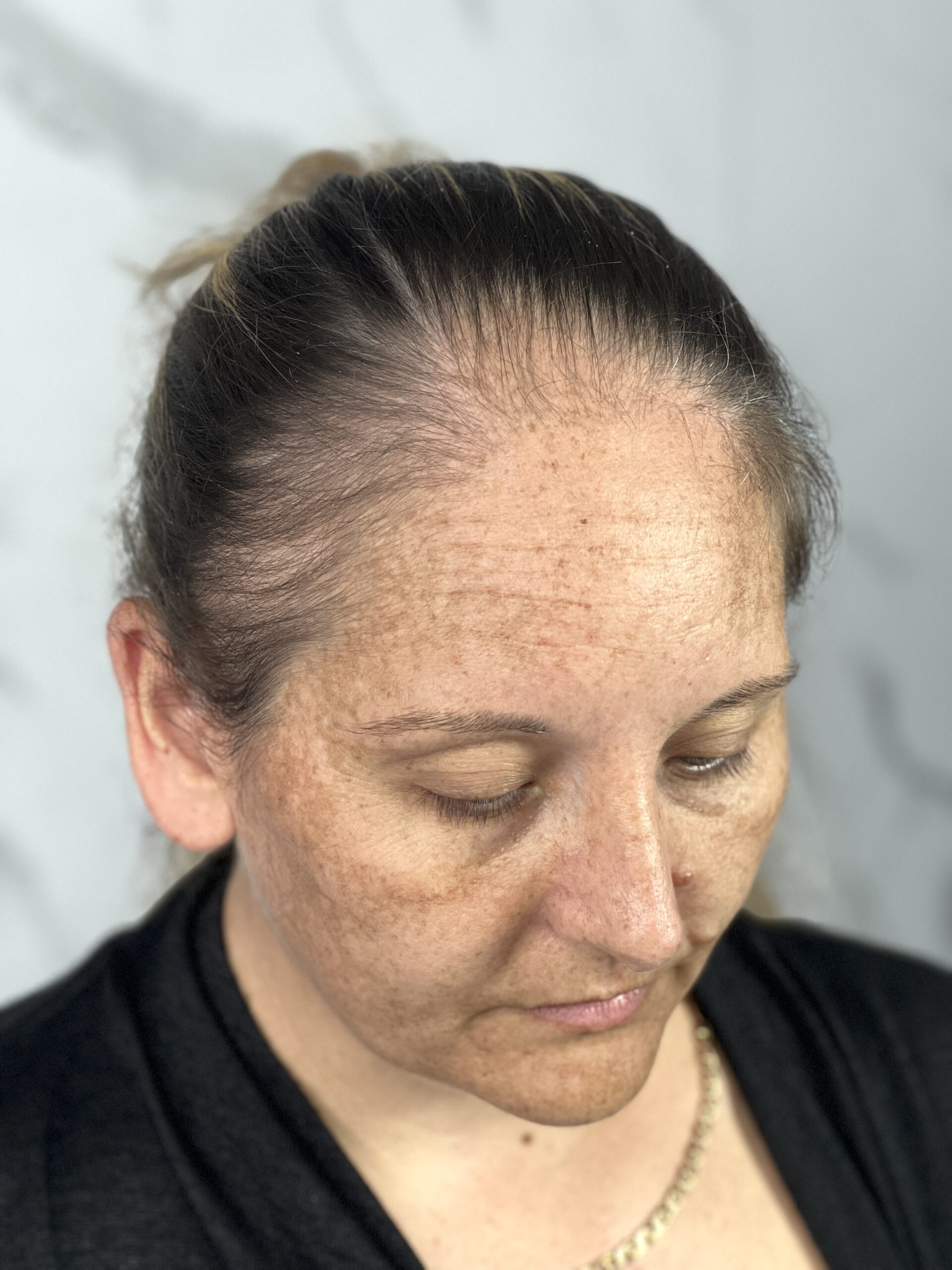
You notice a wider parting in photographs. Your ponytail feels smaller. Under bright lights, more scalp shows through than it used to. Hair changes around perimenopause and menopause can be subtle at first, but they can affect confidence in a big way.
Scalp micropigmentation (SMP) can help some women make thinning hair look fuller. But first, it is worth understanding what is causing the change and whether it is still progressing.
Why Does Hair Thin During Menopause?
Changes in oestrogen and other hormones can influence the hair-growth cycle. Age-related changes and inherited female pattern hair loss may become more noticeable around the same time. The result is often a wider parting, reduced volume at the crown or more visible scalp.
Menopause is not the only possible explanation. Thyroid conditions, low iron, recent illness, stress, medication and nutritional deficiencies can also contribute to shedding. Sudden, patchy or rapidly progressing hair loss deserves medical assessment rather than a cosmetic quick fix.
Menopause Hair Loss: What to Look For
• A parting that appears wider over time
• Less density through the crown or top of the head
• A smaller ponytail or more visible scalp under overhead lighting
• Increased shedding during washing or brushing
• Itching, redness, scaling or patches, which should be checked by a clinician
Can Hair Grow Back?
It depends on the cause. Temporary shedding may improve when a trigger is addressed. Female pattern hair loss is often progressive, although medical treatment can sometimes slow it or improve density. A GP or dermatologist can assess potential causes and discuss options, including whether blood tests or treatments are appropriate.
SMP should complement that process, not replace it. We recommend establishing what is happening before committing to a long-lasting cosmetic result.
How SMP Helps Women with Thinning Hair
Less visible scalp. A fuller-looking finish.
Density SMP involves placing tiny pigment impressions between existing hairs. By reducing the contrast between the scalp and hair, it can make a widening parting or thinning crown look less obvious. Your existing hair stays exactly where it is: SMP creates an illusion of density rather than adding strands.
The strongest results usually come when there is enough surrounding hair for the pigment to blend naturally. Very sparse areas may need a different plan, and SMP cannot recreate the movement or volume of real hair.
When Might SMP Not Be the Right Choice?
• When shedding is sudden, active or unexplained
• When the scalp is inflamed, infected or otherwise unhealthy
• When the hair-loss pattern is changing too quickly to plan a stable result
• When expectations are for new hair growth rather than cosmetic coverage
How We Approach It at Hair Savvy
01 – Understand your hair
We look at the parting, crown, existing density and your everyday hairstyle. We also discuss whether you have sought medical advice for recent changes.
02 – Match, do not mask
Pigment tone and spacing are selected to blend with your natural hair and scalp. The aim is subtle coverage, not a solid block of colour.
03 – Build density in stages
We work gradually and assess healed pigment between sessions. This helps keep the result soft and believable.
Frequently Asked Questions
Does menopause always cause hair loss?
No. Some women notice little change, while others experience thinning related to hormonal, genetic or other factors.
Can SMP cover a widening parting?
Often, yes, if sufficient hair remains to blend with the pigment and the scalp is healthy.
Does SMP stop menopause hair loss?
No. It does not treat the underlying cause or prevent further shedding.
Can I colour or style my hair after SMP?
Usually, once the treated scalp has healed and you follow your practitioner’s aftercare advice. Discuss your usual routine during consultation.
Should I speak to my GP first?
Yes, particularly if thinning is new, sudden, patchy or accompanied by scalp symptoms.
Your Hair, Your Choice
Menopause can change your hair, but it does not have to dictate how you feel about it. If your hair loss has been assessed and you want a discreet way to reduce scalp show-through, book a consultation with Hair Savvy to explore whether density SMP is suitable.