
More hair in the shower. More scalp showing under bright light. A parting that suddenly seems wider than it did a few months ago. Stress-related hair loss arrives quickly, and the important thing is not to rush into covering it.
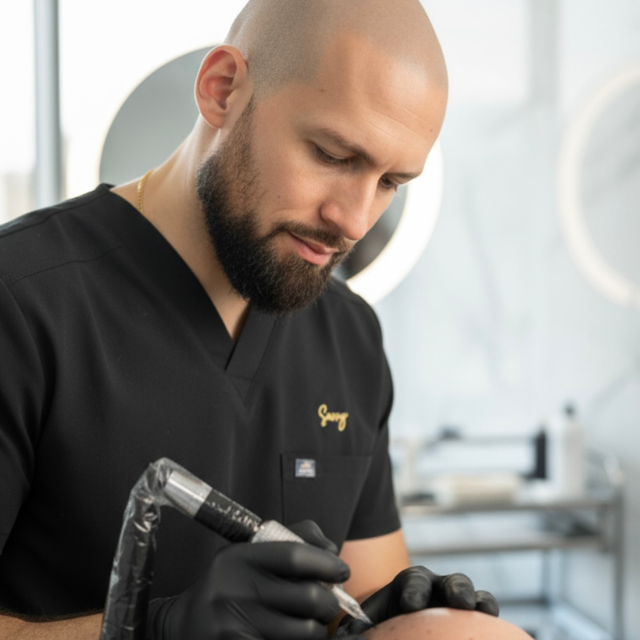
Hair shedding triggered by physical or emotional stress can be temporary. If your hair is still actively shedding, the right first step may be to understand what is causing it and give it time to recover.
If the loss has stabilised and visible thinning remains, SMP can reduce the contrast between the hair you still have and the scalp underneath. We will tell you which situation you appear to be in as honestly as we can, including when we think you should wait.
One of the most common forms of stress-related shedding is telogen effluvium. It can happen after emotional stress, illness, surgery, significant weight loss or another major change to the body. The shedding may appear weeks or months after the original trigger rather than immediately.
And importantly, it can recover. That means somebody whose hair suddenly started shedding a few months ago needs a very different conversation from somebody whose thinning has stayed stable for years.
SMP does not stop shedding and it does not make hair regrow. What it can do is disguise the scalp that remains visible, once we have a clearer idea of what your hair is actually going to do. That distinction is the whole point of this page.
Book a Free Consultation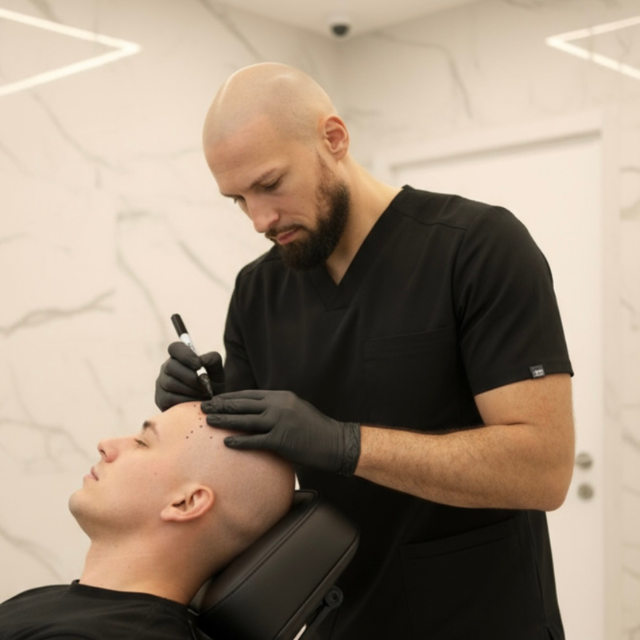
These are the patterns where SMP tends to be worth considering, provided the shedding has settled.
We do not need every consultation to become a booking. If any of these describe you, the honest advice is usually to wait.
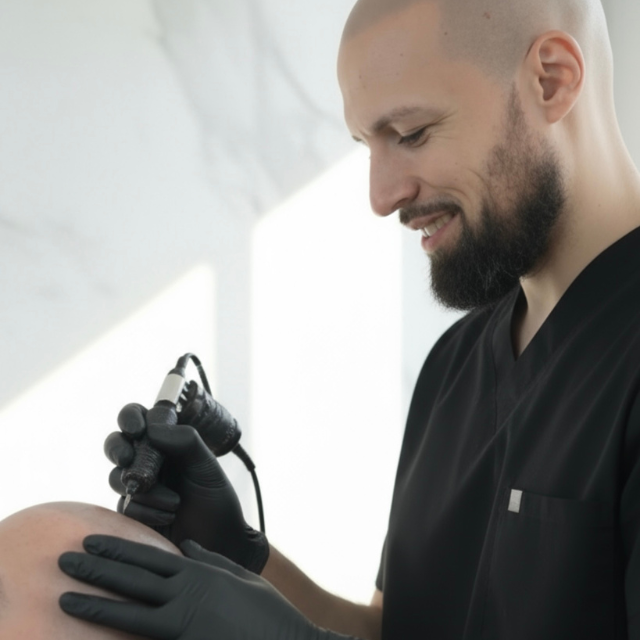
With longer hair, we are not trying to create a shaved-head effect. Instead, tiny impressions of pigment are placed in the spaces between your existing hairs.
When the scalp underneath is significantly lighter than the hair growing above it, every gap catches the eye. Adding carefully matched pigment reduces that colour contrast.
Your own hair stays exactly where it is. You continue to wash it, style it and wear it as normal. What changes is how much scalp can be seen through it. This works particularly well where there is still hair across the treatment area but the overall density has dropped.
We start by finding out what happened. When did the shedding begin? Was there a clear stressful event? Is hair still falling at the same rate? Have you noticed regrowth? If the situation sounds too recent or unstable, we may recommend waiting, or speaking to your GP before anything cosmetic.
If the loss appears stable, we look at where the scalp is showing and how much existing hair is available to work between. We also assess your natural hair tone and how the thinning behaves under different light.
The first layer is intentionally light. Density SMP needs to disappear underneath the hair rather than dominate it, so subtlety matters. We establish the base coverage and let it heal before deciding how much more depth is genuinely needed.
A further session or sessions add more visual density where required. We adjust based on the healed result rather than guessing everything on day one.
You leave with clear aftercare instructions and access to the studio if you have questions. Once healed, you style your hair normally.
Telogen effluvium is one of the most common terms people come across when researching stress hair loss. It describes increased shedding, in which more hairs than normal move into the resting and shedding phase of the hair cycle.
For many people it improves after the original trigger has passed. That is exactly why SMP for telogen effluvium needs to be approached cautiously. If the hair is likely to return, we would rather give it that opportunity.
Where shedding has settled but density has not fully returned, SMP can sometimes be used to make the remaining thinning less visible.
Density work is supposed to be subtle. Here is how we approach it.
If we think your hair needs more time, we will tell you. We would rather lose the booking than pigment a scalp that is still changing.
The best result is not the darkest result. Density SMP should sit quietly underneath your hair rather than announce itself.
Every scalp holds pigment slightly differently. Working in layers means we can adjust as we go rather than overdo it in one sitting.
The aim is for the pigment to sit quietly underneath the hair you have, not to create an obvious second colour showing through it.
Hair Savvy Studio is based in Halesowen, Birmingham. Appointments are handled privately, with free parking on site.
Tell us when the shedding started and whether it has slowed. We will give you a straight answer either way.
Real reviews from real clients across Birmingham and the wider West Midlands.
Sending a big thank you to Alex. My hair looks great, so natural looking. I went for a darker look to go with my tan and it looks great in all lights. If you want a natural-looking SMP, use Alex!
Went along with my son to get his SMP. Well done Alex, a dedicated and professional young man. My son is over the moon with the results. So nice not to see him wearing caps anymore. Looks so natural. Definitely 5 stars and more.
Tell us when the shedding started, whether it has slowed, and what your hair looks like now. We will come back with a straight answer about whether SMP makes sense yet, or whether giving it more time is the better move.